

Cardiff has a car problem.
70% of us in Cardiff commute by car, and two thirds of all journeys under two miles are made by car. With the highest volume of car traffic of any area in Wales, and air pollution levels above safe limits, Cardiffians are living every day with noise, congestion and fumes. It’s estimated that 220 premature deaths in Cardiff each year are linked to poor air quality – yikes.
Even when we know that car over-use is harming us, thinking about changing our travel habits can definitely feel overwhelming, or perhaps even impossible. We might worry about weather, being late, feeling safe or navigating a new route so we decide to stick to what we know and jump in the car.
But leaving our cars behind when we can, especially for short trips, brings bigger benefits than we might realise: not just lower climate pollution and less stinky air but opportunities to get our steps in and get to know our city better… not to mention not having to find a parking spot.

We’ve put together this mini guide to help more people give greener travel around Cardiff a try. Whether you’ve recently moved here (welcome!), you’re just visiting (croeso!) or you’re a lifelong Cardiffian looking to change up your travel habits, we hope it’ll help you try something new.
🚌 How does public transport work in Cardiff?
Bus vs train
Buses, their timetables, stop locations and payment systems, often feel really confusing even if you’ve lived in Cardiff for years. Cardiff bus routes still work on a ‘hub and spoke’ system, with most routes radiating out from the city centre. This can make some journeys frustratingly long as you need to travel into the centre first before traveling out again to your destination. It’s therefore worth checking whether a train journey would be quicker and simpler than a bus.
Planning a journey by bus
Transport for Wales has finally re-introduced a central bus interchange in the heart of the city centre which opened recently-ish at the end of 2024, right next to Cardiff Central train station. When you arrive, you’ll see real-time information screens showing departures and platforms, but with the hustle and bustle of the station, and a lot of bus numbers to choose from, it’s a good idea to download the Cardiff Bus app before you travel. It can help you plan your routes, check live times and help you feel more confident before setting off.
The Cardiff Bus app has a decent “Plan your journey” feature, which is helpful if you’re new to travelling by bus. It gives a clear step-by-step breakdown of your trip, showing which bus to catch, where to board, how long the journey should take, and where to get off, all in one journey itinerary.
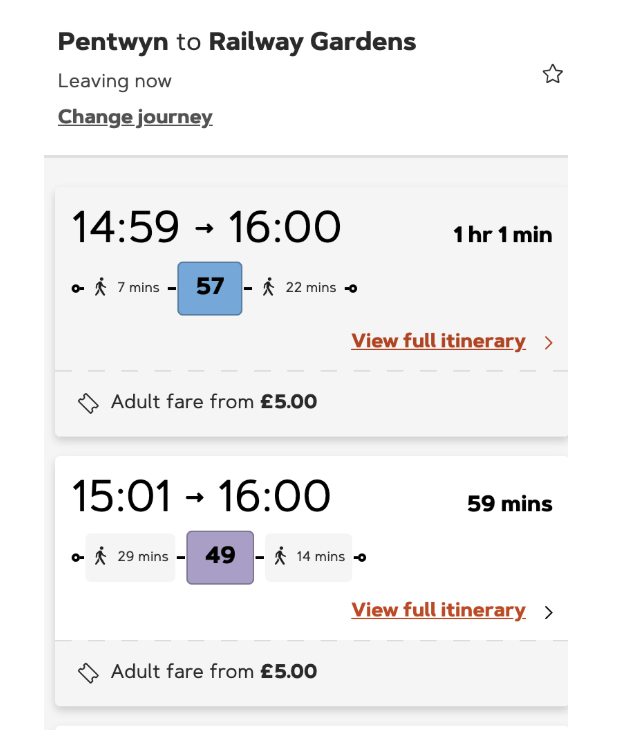
However it’s worth being aware that Cardiff Bus aren’t the only bus operator in the city; we have First Bus too! The First Bus journey planner or the app (get it for android, get it for apple) are really handy as they show journey plans and live times for both their busses and other transport providers, like Cardiff Bus.
Finally, the Transport for Wales (TfW) website and app also let you plan journeys, checking options for both bus and train travel. As we mentioned, it’s worth checking both options as a train trip may be quicker.
Paying on public transport
Most buses and trains running in Cardiff now work on a tap-on/tap-off system, meaning you don’t need cash or a paper ticket before you travel; the system works out the best fare for your journey so that you don’t pay more than you need to.
You can also use contactless or cash to buy single, day, or week tickets for the bus; if you’re paying by cash you’ll need the exact change.
Across most of the city you’ll pay the same wherever you’re travelling within the city. As of early 2026 that’s…
🎟️ £2.50 for a single
🎟️ £5 for a ‘day to go’
🎟️ £18 for a week to go
Children under 5 travel free on Cardiff buses and young people aged 5 – 15 pay a reduced rate; there’s also a good value Family ‘day to go’ ticket that’s worth a look if you’re travelling with kids. If you’re aged 16 – 21 you can get your hands on a free ‘My Travel Pass’ that provides discounted fares. Concessionary passes are available for disabled people and people over 60
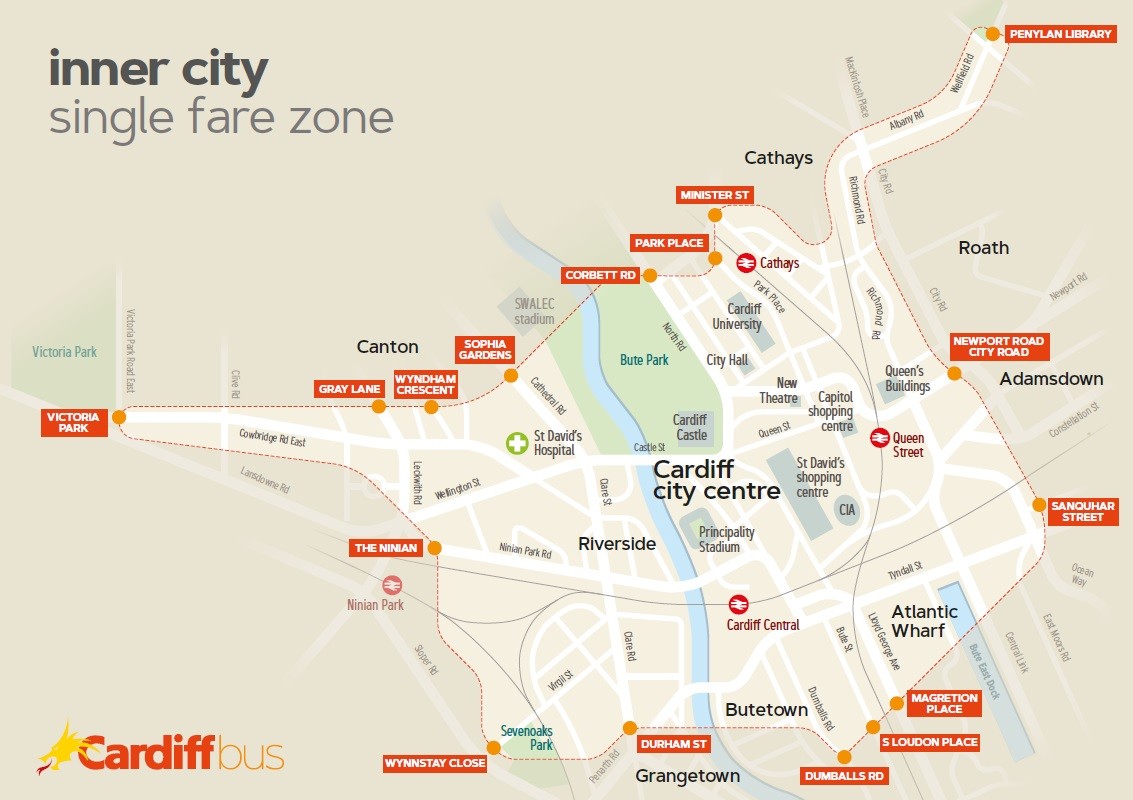
And finally, there are 3 designated fare zones in the city where you’ll pay 50p less per single ticket if you’re travelling with them: City Centre, Ely, and Pontprennau / Pentwyn / Llanedeyrn. The City Centre zone is pretty big – it stretches from Victoria Park in the west to Adamsdown in the east, and Penylan in the north to Dumballs Road in the south.
Accessibility
Public transport in Cardiff has taken a few steps towards improved accessibility in recent years, and support is generally available if you need it, although there’s still huge room for improvement. At Cardiff Bus Interchange the station is step-free throughout, with ramps and induction loops in place. Staff are also on hand to help people navigate the station and answer questions. Most buses are also transitioning to step-free, making it easier for wheelchair users, people with limited mobility, and parents or carers travelling with pushchairs.
For train travel and accessibility info about Cardiff Bus interchange, Transport for Wales (TfW) offers accessibility support. If you have any questions about planning an accessible journey you can contact their accessibility helpline on 03333 211202.
Road closures
Rugby and events at the Principality Stadium can throw a spanner in the works. Check the Cardiff Bus website and Transport for Wales website for planned closures.
Good to know
- Remember to hold out your arm at the bus stop to signal to the driver you’d like them to stop;
- While assistance dogs should always be allowed on the bus, drivers can refuse to allow pets if the bus is busy;
- Bus drivers can also refuse e-scooter and ebikes (and bikes in general if the bus is very busy);
- The traditional thank you for a bus driver in Cardiff is ‘cheers drive’!
- Using pay as you go on the trains and forgot to tap out? Log into your account on the transport for Wales App and you’ll have 7 days to correct a missed tap and get your fare adjusted. You can only do this up to three times each month.
🚲 Active travel in Cardiff
Active travel – walking and wheeling – rose in Cardiff (and most other places) during Covid then dropped again. Right now about one in five Cardiff residents cycle at least once a week, and about half of us walk regularly. There’s the potential for so much more active travel in the city, but even this level of walking and wheeling can be linked to some fairly impressive benefits including…
- 745 serious long-term health conditions prevented
- £245.5 million in economic benefit for individuals and the Cardiff region
- 17,000 tonnes of climate pollution avoided
- And up to 92,000 cars taken off the road every day
It’s one thing to know cycling is a healthy choice, it’s another thing for all the pieces to fall into place for us to feel ready to make that first journey by bike. Let’s take it step by step.
Getting a bike (and learning to ride it)
Bikes can be expensive and not all of us have had the opportunity to learn how to ride. Fortunately, there are some great organisations ready and waiting to help. One charity that has kindly supported us to provide cycling information is Pedal Power. Based in Pontcanna Fields, they work to enable cycling for people of all ages and abilities by offering cycle hire, cycle skills training, and confidence building sessions. They also offer half term courses for children and community events like social group rides. Becca and Hannah had some session with the lovely Gill from Pedal Power in 2024, to help them improve their road cycling confidence, and it was well worth it.
Pedal Power doesn’t just have bikes to hire, they also sell bicycles and work with some Cycle to Work Scheme providers (see below!) too. They have the largest specialist fleet in Wales with standard, adaptive, and e-cycles. Their director, Sam Farnfield, told us:
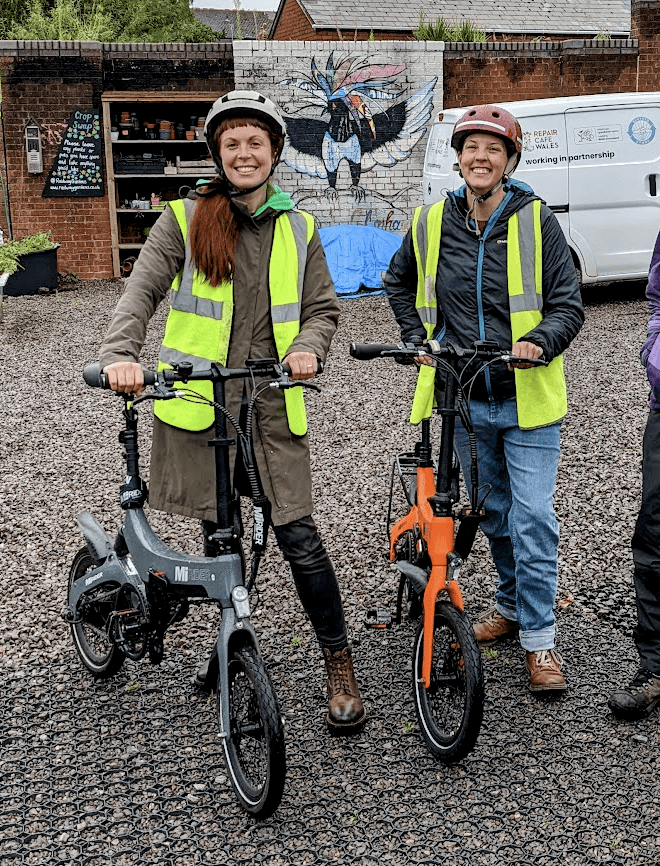
“We’re passionate about what we do, and every day see how transformative being able to cycle can be for many people. Our aim is always to reach and help more people to access and enjoy the many pleasures and benefits of cycling. So, if you’d like to cycle but feel you can’t for whatever reason, then please come and speak to us – we’ll help you to start your cycling journey!”
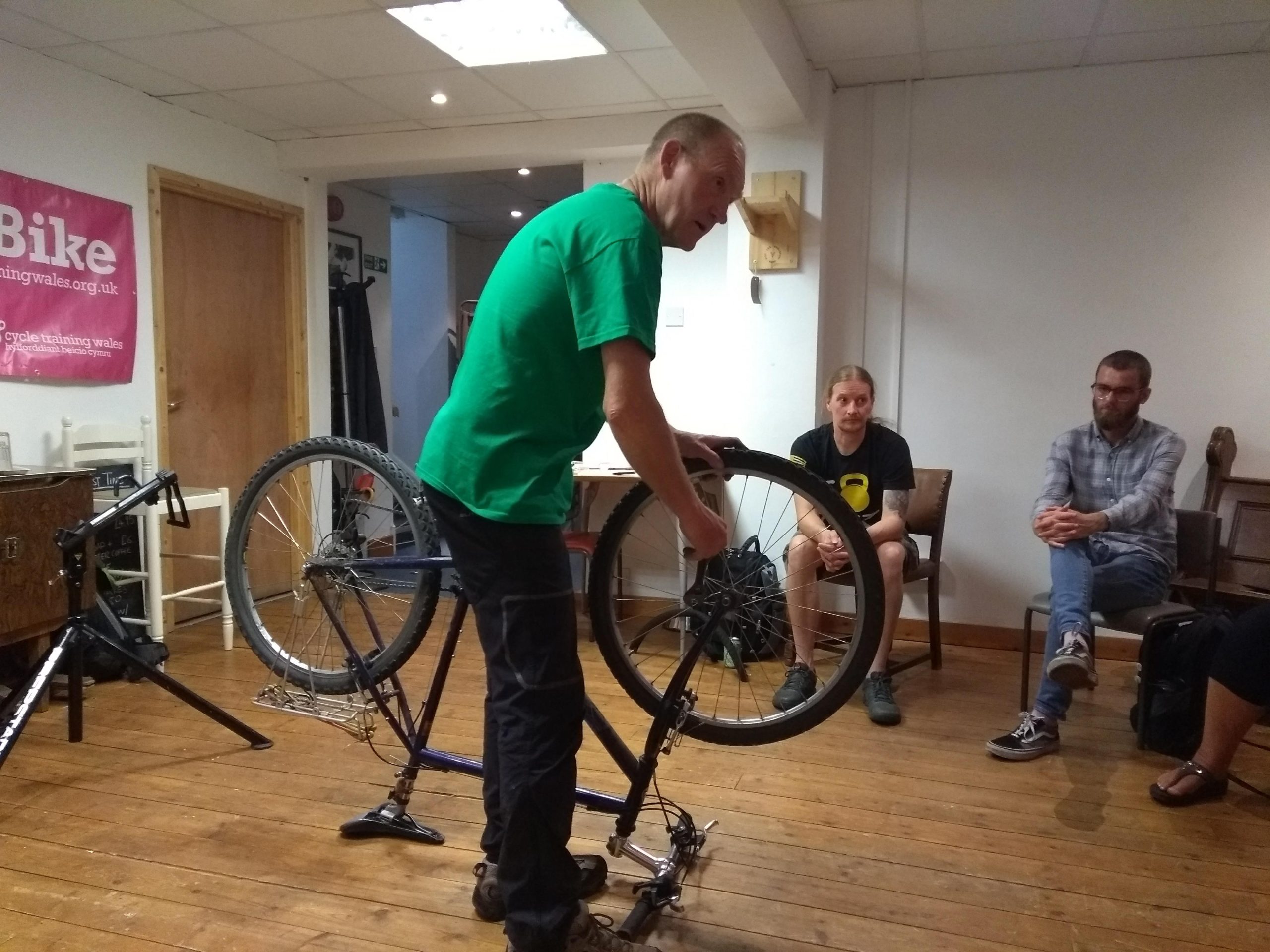
Cardiff Cycle Workshop is in Gabalfa. They can sell you a refurbished second-hand bike, fix your bike, and train you in bike maintenance. If you’re not sure what kind of bike you need then just pop in and chat to them, every Friday from 1 – 5pm or the first Saturday of every month, 10am – 1pm; their friendly and helpful team can offer some suggestions.
We mentioned cycle to work schemes; these are salary sacrifice schemes that, if you’re in employment, can save you a big chunk off the cost of a new bike. Here’s how it works:
Step 1: Talk to your employer to ask them to agree that you can buy a bike through the scheme. All employers can offer this, no matter the business size, and it save the employer money too, save 15% of the total value of the salary sacrifice due to the reductions in Employers’ National Insurance contributions, so it’s a bit of a win-win.
Step 2: Choose a bike and/or accessories from an approved local bike shop or manufacturer subject to a spend limit agreed with the employer.
Step 3: Your employer pays the up-front cost and you pay it back monthly over an agreed period through a salary sacrifice.
You can expect to save between 28% – 47% of the value of the bike through reduced tax and NI contributions; The Green Community Initiative, our preferred cycle to work scheme, has a savings calculator where you can work out how much you’ll save.
What about e-bikes…
The e-bike: to some they’re a dangerous, illegal menace. To others they’re ‘cheating’ at cycling. And to some – including us – they’re an incredible enabling invention that makes cycling so much more accessible.
E-bikes are legal in the UK as long as they meet certain criteria. For example, the motor can’t be too powerful, they must have proper working pedals, they can’t go faster than 15.5 mph and they can only switch on their electric assistance when you’re actively pedaling.
E-bikes can go a long way towards taking some of the pressure and worry out of cycling. They can help you cycle more confidently in traffic, help you arrive at work without feeling all sweaty, and they can help you tackle hills that might otherwise prevent a route working for you. They can cope effortlessly with carrying the extra weight of belongings too, in panniers or a basket or – if you have more to carry – on a cargo bike.
If you’re thinking of buying an e-bike we recommend heading over to Pedal Power to try a few out and find what feels comfortable for you.
Building your confidence
It’s ok to start small, especially if you’ve not ridden in a while. Set yourself mini milestones – can I cycle comfortably to the end of the road and back? Can I get around the block? Can I make the five minute trip to Tescos? Build your confidence slowly so you can get a feel for handling your bike and learning to observe and navigate the traffic. The Commute Smart videos from British Cycling are a good place to find visual guidance on key skills like road position and negotiating junctions.
Don’t forget – one of the lovely things about going by bike is that you can hop off and become a pedestrian if you’re worried about a particular junction or if it all just feels a bit much.
Cardiff Cycle City suggest tackling an easygoing, flat route when you’re starting out, to help grow your skills and confidence. Why not try the 6 mile Cardiff Bay Trail via the Barrage or the traffic-free Taff Trail?
Group rides can be a big confidence boost too, and Breeze offers free, regular, women-only guided bike rides around Cardiff. Cardiff Social Cycling offer group rides open to all.
We mentioned the adult cycle training available with Pedal Power already, but you can also book short, free adult training sessions, available at different levels, with Cardiff Council.
Planning a route
Cardiff’s cycle routes are improving all the time but you’d be forgiven for not realising it; Cardiff Cycle City are literally petitioning Cardiff Council to invest in signposting people to their £10 million cycle network improvements.
Despite the council’s ‘keep it under your hat’ approach to Cardiff’s new cycling infrastructure, the new ‘cycleways’ are generally pretty good, connecting the Bay, the Uni, the city centre and University Hospital Wales as well as the Taff Trail. However, finding information on cycling in the city can be a pretty frustrating experience… the cycling and walking map on the Council’s various websites is out of date and little clear information seems to exist.
We recommend simply skipping official council info and using a general route planning tool instead. Google Maps offers cycle route planning, although in our experience it occasionally gets over-excited and sends you up some steep steps or through a dodgy scrap of wasteground. We recommend giving Cyclers app or Komoot a try. If you’re planning to cycle to work, test out your new route on the weekend so you can get a feel for how long it will take you and feel well prepared when you do it for real.
Jane got in touch to share her experiences with Cardiff’s two way cycle lanes, reminding us that it’s normal for these to feel a bit weird the first couple of times you use them. Lots of them are light controlled which makes it so much easier to feel confident as a cyclist, although it’s worth being aware that a lot of pedestrians realise this and may try and step out in front of you.
Do you need a bunch of kit?
No – only a few basics.
To helmet or not to helmet is an ongoing (and sometimes fierce) debate. You don’t legally have to wear a helmet in the UK, and a number of major cycling charities opposed the government making it compulsory because, in the words of the London Cycling Campaign, “the overall result of compelling those who cycle to wear helmets is that any safety gains/collision severity reduction of doing so is far outweighed in public health and other terms by the lower levels of cycling in general caused by such a move.”
Cycle helmets are designed to protect against falls at low speeds; they are not able to protect us in a collision with a car. There’s even evidence that cyclists who wear helmets are more likely to be involved in a car collision, either because they or the drivers around them make riskier choices, feeling protected by the helmet. You can read a lot more about this interesting and fraught debate here, but fundamentally whether you wear a helmet or not is a personal choice.
Whether or not you decide to wear a helmet, lights and hi-vis accessories are so essential for visibility, especially at night and on gloomy winter days. You’ll want a front and back light, ideally USB rechargeable so you don’t need to faff about with batteries, and you may want to add more lights too, such as a helmet light or a light that clips on your backpack. Hi-viz vests, rain jackets, and bag covers are an affordable way to increase your safety.
You’re also going to need a bike lock (see below) and you may need something for carrying your stuff, like a front basket and a rack with a rear basket and/or and pannier.
Optional but useful items include a bell, so you can politely let pedestrians on shared use paths know you’re coming, or to warn people who are about to step out in front of you! If your bike doesn’t have mudguards then you might want to add them – it’s cheap and easy to do – to protect your clothes, especially if you’re commuting.
Security and storage
Yay, bike theft. Cardiff is the third worst city in England and Wales for bike theft, and finding a big nothing where your bike should be is a huge day-ruiner when all you want to do is hop on your bike and get to work.
The answer is mostly ‘get a really chunky lock’. Choose a D lock or a chain lock with a gold or diamond ‘Sold Secure’ rating. These can be eye-wateringly expensive but better than buying a whole new bike. If possible, lock up your bike in places with good lighting and plenty of passers by, and lock it through the frame as a priority, not just a wheel. Two different kinds of lock, to secure the frame and the wheels, is ideal but this is a balance between security, cost, and day to day fiddling about with locks. Although it’s a pain, take any removable bits like lights or panniers with you.
It’s a good idea to take photos of your bike when you first get it, and write down its make, model and frame number (usually 6 digits, stamped on the frame). You can buy a UV Bike Marking kit for £15 – £20, to give your bike a unique marking to prove it’s yours in the event it gets stolen and recovered; bike marking is also often offered by the police at community events so keep an eye out. It’s also worth taking 5 minutes to get your bike up on Bike Register.
How about storage? Cardiff Council has recently installed 31 secure bike lockers at seven city centre locations, these cost £1.50 for the day. You need to download an app (Spokesafe) to book and access your locker. We’ve not used these yet but we’ll be interested to see whether there is good uptake for them.
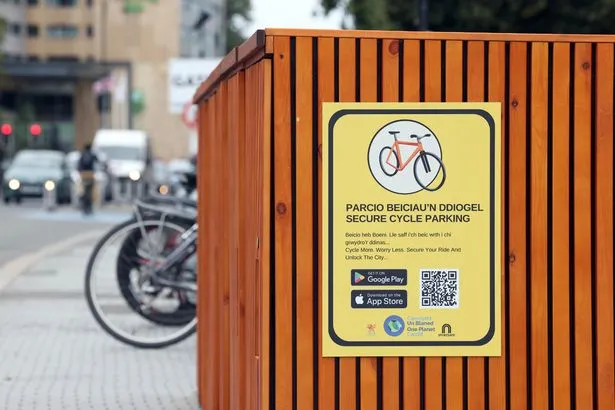
After we published this blog Jane got in touch to say ” I have used the new lockers in the city centre a couple of times – getting the code to work can be a tad tricky but works well otherwise. Another advantage I found when leaving my bike for a few days when going away by train was that I could also leave my helmet, lights, weather gear etc in there & not have to take all that with me”
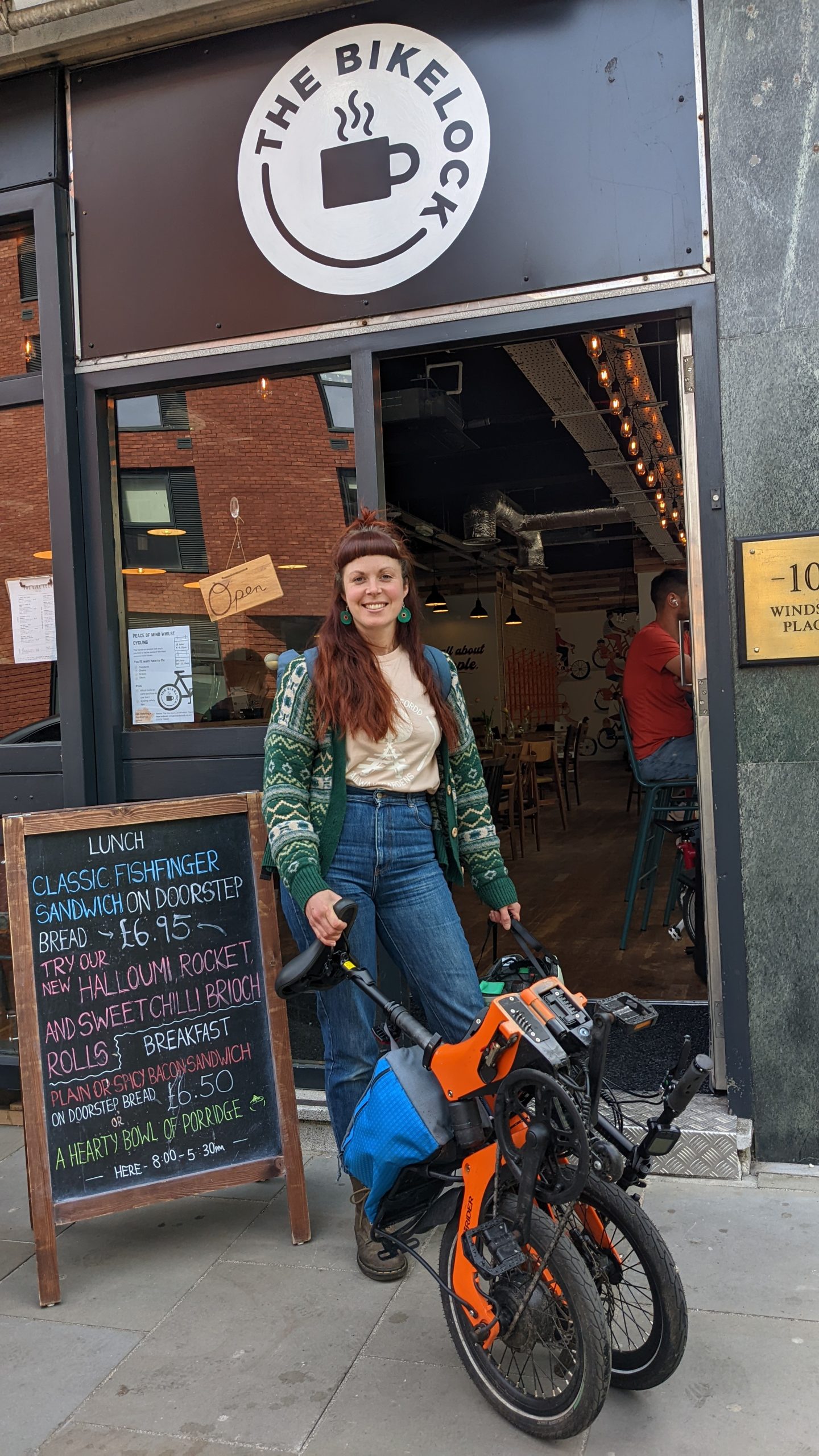
Another city centre storage option is the lovely Bike Lock cafe, offering secure storage, good coffee and friendly people.
Plans are also afoot for secure bike hangars for residents; we are excited that one is planned right by us in Splott.
🚶🏾♀️Cardiff on Foot
Cardiff is a pretty walkable city; from Cardiff Central you can reach the Bay, the Uni, Chapter, Pontcanna fields and many of the city’s green spaces and venues in half an hour or less. Big chunks of the city centre are pedestrianised too.
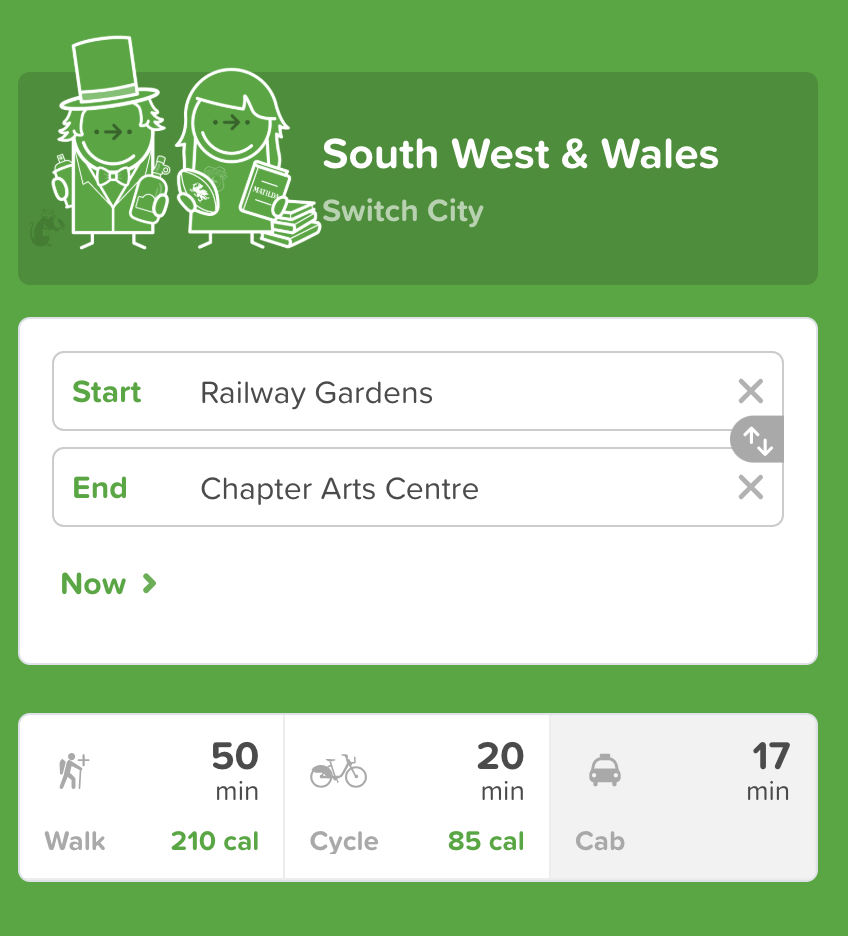
If you’re simply looking to get from A – B then Google Maps will do the trick, but City Mapper is worth a look too, with some nice features like helping you stick to well-lit streets at night and integrating loads of public transport info like live bus locations.
If you’re more interested in exploring on foot for fitness, adventure or just some me-time then try Go Jauntily, an ‘encyclopaedia or urban walks’ in your pocket. Outdoor Cardiff also has a collection of walks in and around the city, including Story Walks for kids.
And if you’d like to try walking Cardiff’s trails but you’d prefer a bit of company then you might fancy joining a Walking Group. There are some friendly and approachable options available including…
The Ramblers: This adults-only group walks a wide variety of places in south Wales, not just Cardiff, but All walks are difficulty graded so you can pick a walk according to your preferences. The Ramblers allow you to sample some walks for free, although regular walkers are expected to become a ramblers member at £3.75 per month or £45 per year.
Cardiff Outdoor Group: This walking group is run by its members, offering both weekend day-walks, and weekends away. This group is child-friendly but all children must be accompanied by an adult.
The Cardiff CHA Walking Club: This Club has been around since 1926 and they offer walks every Saturday of the year. You are welcome to join them for a few walks free of charge, and membership is only £9 per person per year.
🔮 What’s next for car-free travel in Cardiff? And how can we help push for greener travel in the city?
Cardiff has got ambitious plans for public transport, including…
- Cardiff crossrail, connecting central station to the bay
- Metro stations in areas of the city including Butetown, Crwyd Road, Splott, Velindre, Roath Park and Victoria Park, connected by a train-tram service.
- A new main line station in St Mellons
- Improvements at Central and Queen Street to make them less grotty and awful
- A new circular bus route, dealing with some of the problems caused by the current spoke and hub routes
- More park and rides offerings
- Fast bus routes, sped up by things like smart traffic lights
- Potentially the return of on-street bike rental to replace the doomed NextBikes that mostly ended up in the Taff. This seems likely to be an e-bike offering – read more here.
Timelines for a lot of these projects aren’t clear however, and progress can be frustratingly slow… but that doesn’t mean we can’t make things better while we’re waiting! Here are 5 things you can do to help make Cardiff a sustainable transport city:
- Join or support a campaigning organisation, like Cardiff Cycle City or Living Streets Cymru to help keep active travel on the agenda. Cardiff Cycle City have out together a fantastic Manifesto for the Senedd elections setting out what they’d like to see in the city.
- Book our ‘Greener at Work’ session for your business or organisation and let us know when booking that you’d like a focus on supporting sustainable travel for employees.
- Look out for one regular trip that you could do by public transport, by bike, or on foot. It doesn’t need to be a long trip!
- Need to take the car? Be an active travel friendly driver! Whether it’s picking up some tips for driving safely around cyclists, not blocking the cycle lane or drop kerbs when parking, or learning and telling others about the ‘Dutch Reach’ method of opening your car door, considerate driving can make active travel easier for all.
- Respond to council consultations around transport to ensure your voice is heard and your experiences considered. There are usually a few open at any time and you can find them here.
Bonus idea! Hamish got in touch to encourage everyone with kids to consider setting up a Bike Bus for their school. The FRideDays toolkit takes you through every step – download it here.
We hope you found this guide wheely useful!
Did we miss something? Got a good tip or route to share? Email it to hannah@greensquirrel.co.uk