
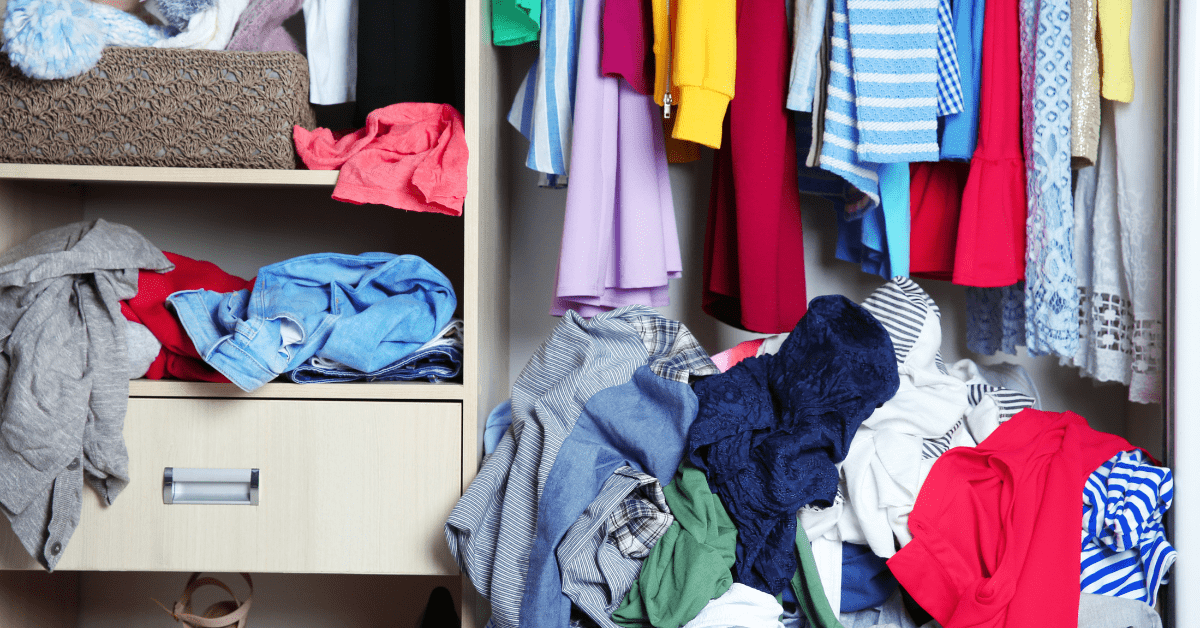
The average adult in the UK owns 118 items of clothing... and 26% of these items haven't been worn in over a year!
If your wardrobe is feeling a bit out of control then now is the perfect time to tackle it, ready for the warmer months AND ready to pass on anything you no longer need at our annual clothes swap, taking place on April 26th in 2026.
A simple 3 step process to carry out a wardrobe audit
Step 1: Get everything out!
Yes, everything. Pile it all up on the bed.
Step 2: Designate two areas of your room for separating clothes
One pile will be for clothes that can be passed on, swapped, or donated, and one will be for clothes that are reaching the end of their life but can be upcycled or recycled.
Step 3: Take one item from your pile at a time and for each item ask yourself...
❓Does it fit me?
❓Do I feel good in it?
❓Does it need any repairs?
❓Have I worn it in the past year?
❓Do I have a lot of similar things?
For everything that you decide to keep, return it to its drawer or wardrobe. For items on coat hangers, try putting all the hangers facing in the same direction. Each time you wear an item going forward, swap the hanger around to face the other way. This will show you, at a glance, which items you’re not using and speed things up next time you do an audit!
Sometimes clothes have reached a stage where they’re just too ratty to swap or donate; Upcycle My Stuff have come up with 25 clever ways to put them to good use!
Now get your items clothes-swap-ready!
Whether you’re coming to our Clothes Swap, or donating your items to charity, just give them a wash or airing if needed and, if there’s a small repair needed, like a loose hem or a button missing, use a safety pin to attach a note explaining what needs to be done.
Our Clothes Swap is taking place between 11am – 1pm on Sunday April 26th at Railway Gardens in Splott.
- All clean clothes in good condition are welcome – mens’, womens’ and childrens’ clothes are all fine.
- Plus sized clothes are especially welcome.
- Bring your clothes along on the day between 10:30 – 11am.
- Swapping will begin at 11am and continue until 1pm. Don’t forget to bring a bag to take home the clothes you choose!
- We don’t operate a token system or anything like that – everyone is welcome to take what they need, regardless of how much they bought to swap.
If you can’t come on the day but would still like to gift clothes for someone else to take home then please drop them off to us on the following dates:
- Wednesday April 15th, 10am – 4:30pm
- Thursday April 16th, 10am – 4:30pm
- Sunday April 19th, 2 – 4pm
- Tuesday April 21st, 10am – 2pm
- Friday 24th April, 10am – 12pm
- Saturday 25th April, 10am – 4pm
Loving our clothes is a caring thing to do
The statistics around clothing waste are jaw dropping. The amount of clothes we buy has skyrocketed in recent years; the average UK adult now buys 60 new items each year – that’s about one new thing every 6 days. Globally, clothing production has doubled in the last fifteen years, but over period the amount of use we get out of each bit of clothing has dropped 40%. Right now in the UK the average person wears each item just 7 – 10 times before it’s discarded.
It’s no secret that this level of consumption and waste has some grim effects on people, nature, and the climate. The fashion industry pumps out a massive 10% of the planet’s climate pollution (that’s more than global flying and shipping combined) and it’s responsible for 20% of global water pollution, not to mention microplastics.
Around the world, just 2% of the people making clothing earn a living wage, and most work in unsafe conditions. Our clothes may be harming us too; large number of items from SHEIN & other popular brands found to contain harmful and carcinogenic substances at hundreds of times over legal limits
Changing our relationship with clothes will have a huge positive impact on climate pollution, nature, and equality.
This begins with changing our mindset to reject ‘fast fashion’ thinking. Yes fast fashion is all around us, and sometimes it’s the only option we can afford, but we don’t need to buy into the throwaway culture promoted by brands. We can slow down and decide to be intentional about what we wear. An item of clothing from a fast fashion brand can suddenly become an extremely sustainable item if we commit to cherish it, care for it, and wear it as long as possible.
We love the #30Wears rule – this was coined by Livia Firth, a sustainable fashion consultant. She suggests that unless we think we’ll get at least 30 wears from a garment, we shouldn’t consider buying it.
Why donating to charity shops may not always be the answer...
We absolutely love a charity shop rummage – but the simple process of dropping off a bag of clothes to charity is not all that it seems…
11 million items of clothing are disposed of each week in the UK, a huge amount. Charity shops simply cannot cope with that quantity of stuff, especially as a lot of it is very poor quality; between 15 – 25% of all donations can’t even be considered for sale as they’re nasty or damaged.
What happens to the rest? Anything charity shops can’t sell is often traded abroad. It’s sold for a small amount to exporters to who send the clothes mostly to countries in sub-Saharan Africa but also to Asia south America, Ukraine, and Poland. Between 70 – 90% of all clothes donated in the UK head overseas; take a look inside Kantamanto Market in Accra, Ghana, for an example where many of our donated clothes end up.
Communities on the receiving end of clothing waste exports are quite simply drowning in it. With no other way to dispose of it, much of it is burned, close to areas where people lives nad work, and I’m sure you can imagine the toxic fumes created by synthetic clothes.
We are definitely not saying everyone stop donating to charity shops! But we all need to think carefully about whether we’re using ‘I can just donate it to charity’ as a way of justifying buying more than we need.
So what's the solution?
The most sustainable clothes are the ones we already own, and in addition to our wardrobe audit there are loads of ways we can get more use out of each item…
- Clothes Swapping! Come to our annual swap (did we mention that it’s taking place on April 26th in 2026) or host a friends & family or community clothes swap?
- Changing our laundry habits: wash less, wash cooler, and use a little less detergent. You’ll find more tips for greener laundry from Hubbub here.
- Storing our clothes carefully to make them last, managing moths, and avoiding stretched clothing; the Little Aussie blog has a handy guide.
- Getting our clothes adjusted so they’re comfy or practical enough to keep wearing. Did you know that Timpsons offers clothing alterations?
- Refresh them: could you dye, patch, embroidery or otherwise update your clothes?
- Learn basic mending (find an awesome library of techniques from Repair What You Wear – or take it to a repair cafe. Find your closes repair group here.